


What the OVERLOAD message is telling you
The unit has shut itself down on purpose
When the system detects that one or more components is not working properly, the screen displays OVERLOAD and the unit shuts down to protect itself from damage. Many of these can be cleared by the operator in a few minutes.
Work through the causes below in order. If the fault is still there at the end, send us the details and we will come back to you within 24 hours.

The six parts you need to name
Any of these can trigger a system fault. Knowing what each one is called makes it faster to isolate the problem yourself, and faster to describe it to our service team.
Power supply
The box with the user interface. It controls the system and sends the electrical signal to the rest of it. Some manufacturers call it a generator.
Converter cable
Carries the electrical signal from the power supply to the converter. Part no. 201-0300.
Converter
Turns the electrical signal into mechanical motion and drives the probe or horn. Also known as a transducer.
Standard probe
630-0220 is standard on the VC 505, VCX 500 and VCX 750. The VCX 130 and VCX 130PB use 630-0435, and the VC 50 uses 630-0422.
Replaceable tip
The 13 mm tip (630-0406) threads into the end of the standard probe. Replaceable tips are for aqueous samples only.
Microtip
The 3 mm microtip (630-0418) attaches to the end of the 630-0220 standard probe for processing smaller volumes in small tubes.

Ten common causes, and how to clear them
Microtip error
A microtip that is worn out, overheated or not tightened properly will overload the unit. A pitted, eroded tip is one of the most common causes we see.
ResolutionCheck the condition of the tip and confirm it is wrench-tight, then test again in water. If it is pitted or eroded, replace it. Use the five-step test below to confirm the microtip is the culprit.

Overheating
A 20 kHz probe operates in liquids up to roughly 60 °C. Above that the unit can overload. Running at high amplitude for long periods also overheats the converter, which should stay near room temperature, around 21 °C. Touch the case: if it is warm, shut the sonicator off and review the setup.
ResolutionAir cool the converter, using the instructions in the manual, and keep the liquid below 60 °C. Air cooling is recommended for continuous mode beyond 10 minutes, and is required at all times when using a Flocell.
Parts are not tightened properly
Converters, probes, horns and tips all need to be wrench-tight. Hand-tight is not enough.
ResolutionDisassemble each part and check the threaded connections. Clean and dry them as set out in the manual, tighten with the wrench set, then test the system in water.
Worn tip
An excessively worn tip will overload the unit. Compare yours against a new one: a rough, cratered face means it is done.
ResolutionInstall a new tip or probe.

Liquid inside the tip
Liquid in the tip threading will overload the system. Standard probes with a replaceable tip are for aqueous samples only, as other solvents work their way into the threading. Nanoparticles can also get in if the mating surfaces of the tip and probe are worn.
ResolutionRemove the tip, clean and dry it, and reattach tightly with the wrench set. Inspect and clean tips regularly. For solvents other than water, use a solid probe or horn.
Improper clamping of the converter or probe
Clamping an active surface of the converter or probe will cause an overload.
ResolutionUse a Sonics clamp stand, or follow the clamping directions in the manual.

Viscosity
Ultrasonic processors run best in low viscosity liquids. Around 3,000 cps is the estimated maximum for most probes, though a microtip may cut through a sample that overloads a larger tip. As a rule, the liquid should flow and pour freely. Honey, for example, cannot be processed.
ResolutionReduce the viscosity of the liquid being processed.
Electrical issue
Each unit is built for a specific line voltage. Test the outlet with other equipment and check with your facilities staff that the electrical service is working properly.
ResolutionCheck whether the main fuses on the back of the power supply have blown, noting that replacing them may not fix what caused them to blow. Check the voltage rating on the silver label against your wall voltage. Power supplies are labelled 110 V or 220 V, and both indicate a range.
Damaged cable
The converter cable can be damaged by sharp bends, or by a fault in the power supply or converter. This is uncommon, but worth checking for wear, exposed wires, kinks and a broken connector.
ResolutionReplace the cable.
Unit stops with no error message
This usually points to the Energy button. The Energy feature stops ultrasonic activity at a programmed value in Joules, so a value set too low, or set by mistake, will stop the run early. It applies whether you are running a program or working manually.
ResolutionClear the values entered into Energy. Press the Energy button, then press Clear.
Is the microtip actually the cause?
Swapping the microtip for a standard flat tip tells you quickly whether the fault sits with the tip or somewhere else in the system.
- Remove the microtip.
- Attach the 13 mm (½") flat tip to the open threaded end. This is the tip the probe shipped with, and it must be fitted before the processor is used.
- Tighten the tip with the wrench set. The processor is now ready to plug in and test.
- Insert the tip about 25 mm (1") deep into a 200 mL beaker holding at least 100 mL of water.
- Run the processor at 25, 50 and 100 % amplitude.


If it runs cleanly with no overload, the microtip is confirmed as the cause and needs replacing.
What happens if it needs to come in
Replacing or adding a processor?
If your unit is past economical repair, or the lab has outgrown it, these are the Vibra-Cell models we supply across Australia and New Zealand. All come with a 3-year parts and labour warranty.
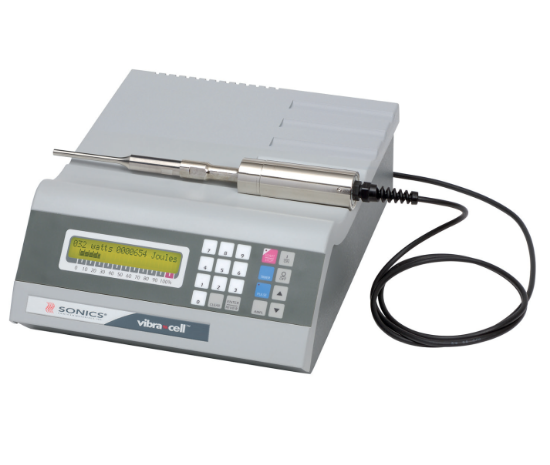
Sonics VCX-130
A compact 130 watt processor for small volume work in life sciences, nanotechnology and materials processing.
- 130 watt output, volumes from 150 µL to 150 mL
- CV18 converter with 6 mm (¼") probe
- Energy monitor and digital wattmeter for process validation
- 10-hour timer with 1 to 59 second independent ON/OFF pulser
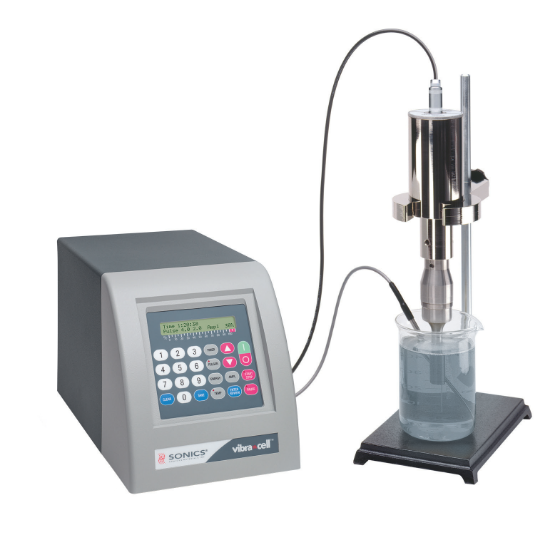
Sonics VCX-500
A programmable 500 watt system for small and medium volumes across organic and inorganic materials.
- 500 watt output, from microlitres to litres
- CV334 converter with 13 mm (½") replaceable tip probe
- Wattage and energy display, temperature monitoring and energy set-point control
- Use solid probe 630-0219 for organic solvents and low surface tension liquids
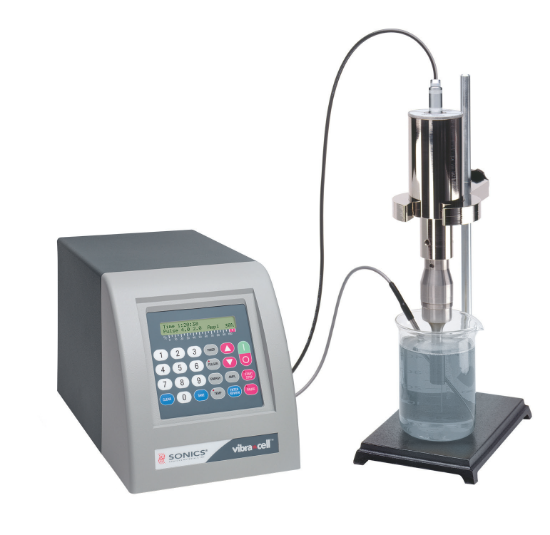
Sonics VCX-750
750 watts of ultrasonic power with set-point control, for demanding and repeatable laboratory processing.
- 750 watt output for microlitre to litre volumes
- CV334 converter with 13 mm (½") replaceable tip probe
- Energy and temperature set-point control
- Digital wattmeter with automatic tuning
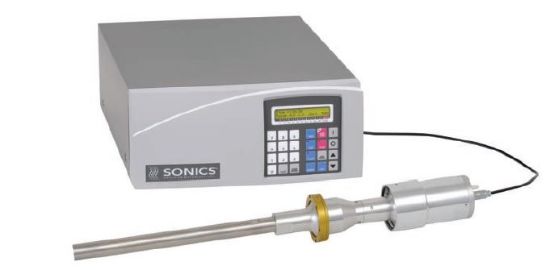
Sonics VCX-1500
A 1500 watt, 20 kHz system built for large volume and industrial processing, including emulsification and degassing.
- 1500 watt output at 20 kHz, volumes up to 20 L*
- CV294 converter, BHNVC21 booster and 25 mm (1") high efficiency probe
- Energy and temperature set-point control with automatic tuning
- Remote control capability for automated integration
*Up to 20 L when used with the 25 mm (1"), 470 mm (18.5") long solid probe, part no. 630-0621, and a mechanical stirrer. Browse the full Sonics and Materials range.
Built for a specific application?
Three packaged systems we supply for work that needs indirect sonication, temperature control or continuous flow.
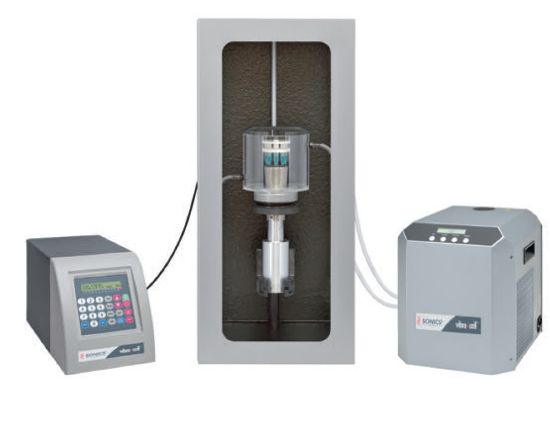
500 W with cup horn, enclosure and chiller
A turnkey 500 watt setup for indirect sonication where noise and sample temperature both need controlling.
- 500 watt processor with CV-334 converter and cup horn 630-0731
- Sound enclosure 830-0427 to cut operating noise
- Chiller 830-0905 for temperature control during processing
- Indirect sonication reduces the risk of sample contamination
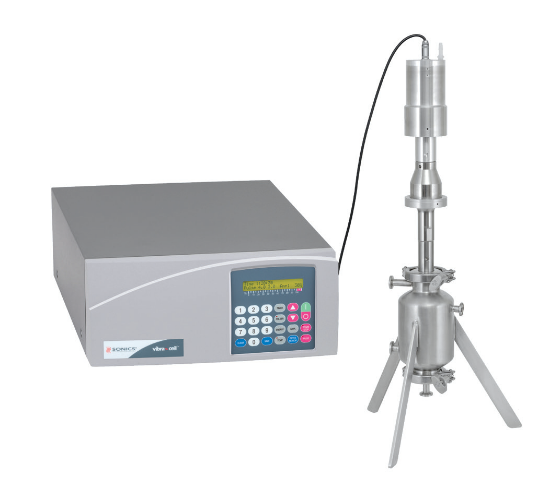
Sonics VCX-1500HV-220
A 1500 watt system with a high volume continuous flow cell, for large volume and industrial processing.
- 1500 watt output at 20 kHz, CV294 converter and BHNVC21 booster
- 630-0583 high volume continuous flow cell with 630-0617 probe
- Water jacketed cell allows cooling or heating during processing
- Flow cell disassembles easily for cleaning and inspection
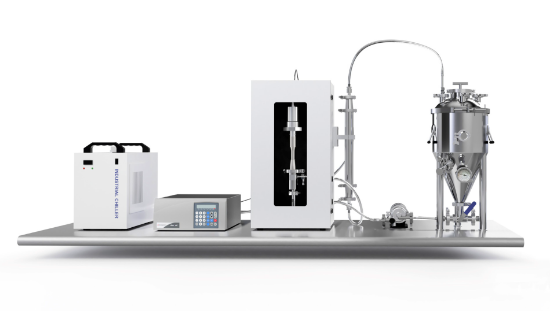
2000 W flow cell package
The VCX-2000FP-220 package, built around the 630-0705 flow cell for high throughput processing.
- VCX 2000 processor with 630-0705 flow cell
- Includes chiller 830-00914 and heat exchanger 830-00522
- Booster, probe, stand and sound enclosure supplied
- Pump, tank and tubing not included, as requirements vary by application
Still overloading? Send us the details
Tell us the model, the serial number and what you have already tried, and one of our service team will come back to you within 24 hours. We can also quote replacement tips, probes, converters and cables.
Call 1300 501 555 or email info@johnmorrisgroup.com. John Morris Group is the authorised distributor and service agent for Sonics and Materials USA products in Australia and New Zealand.